Image - 2026-11-16 03:45
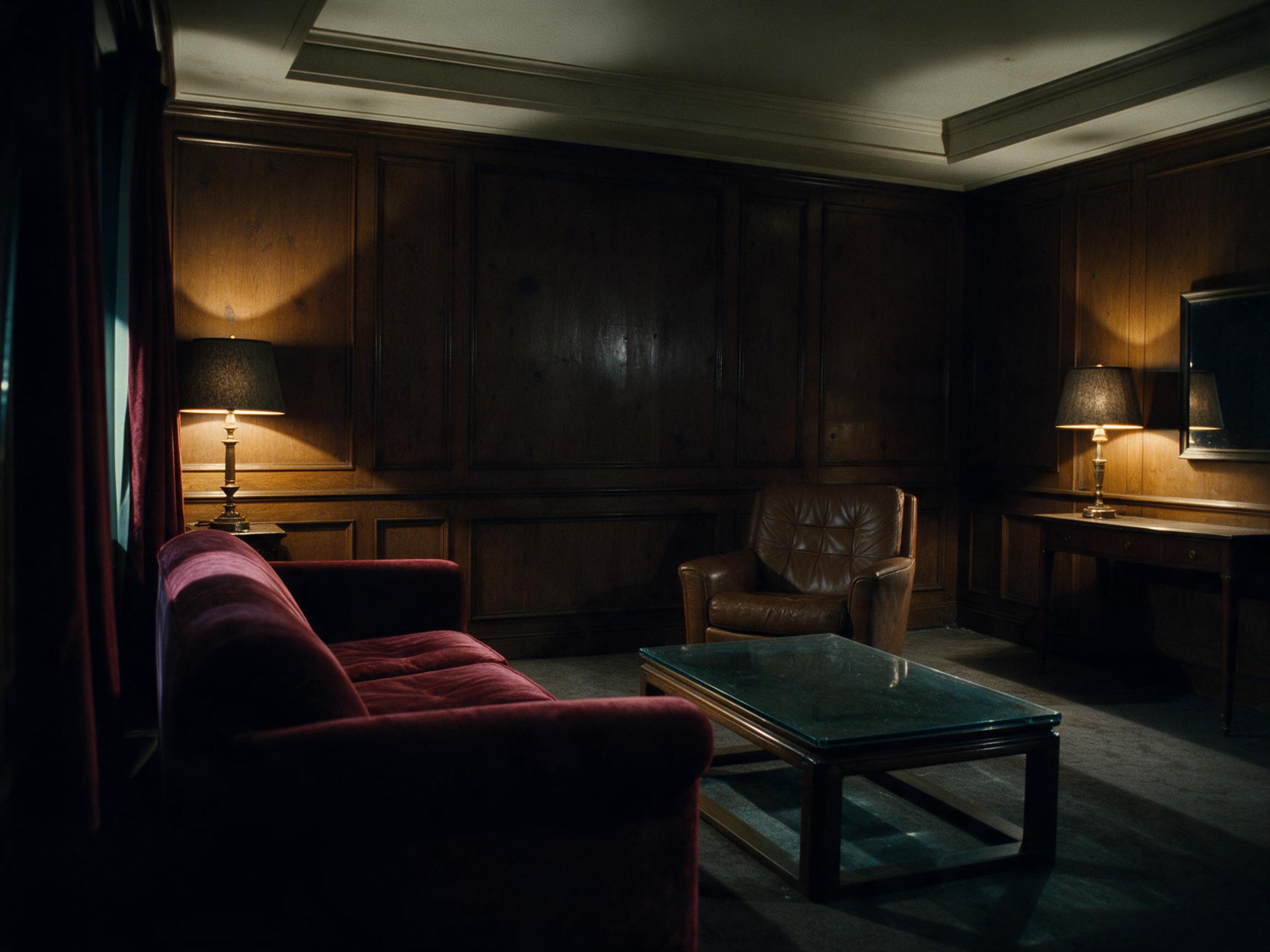
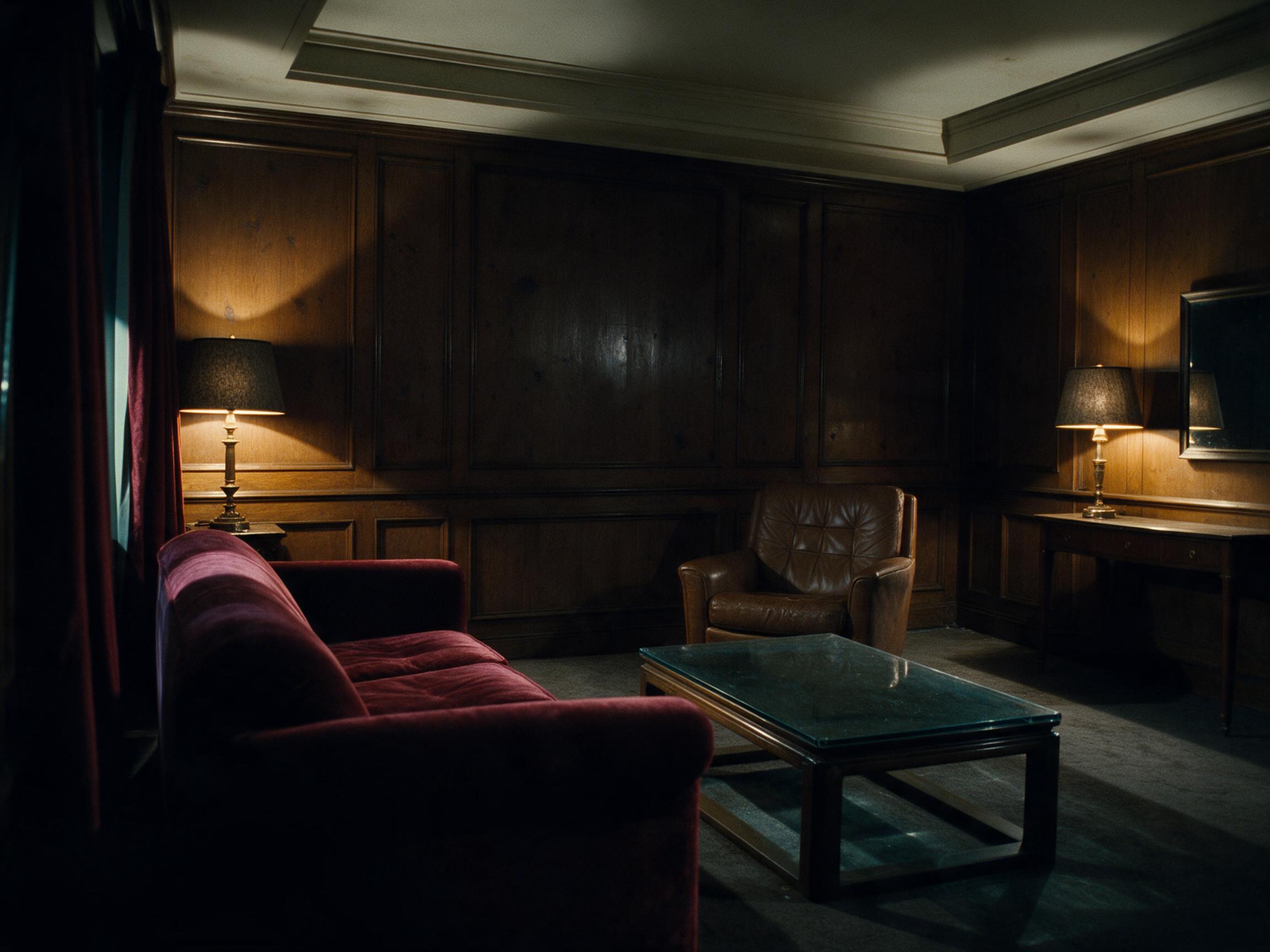
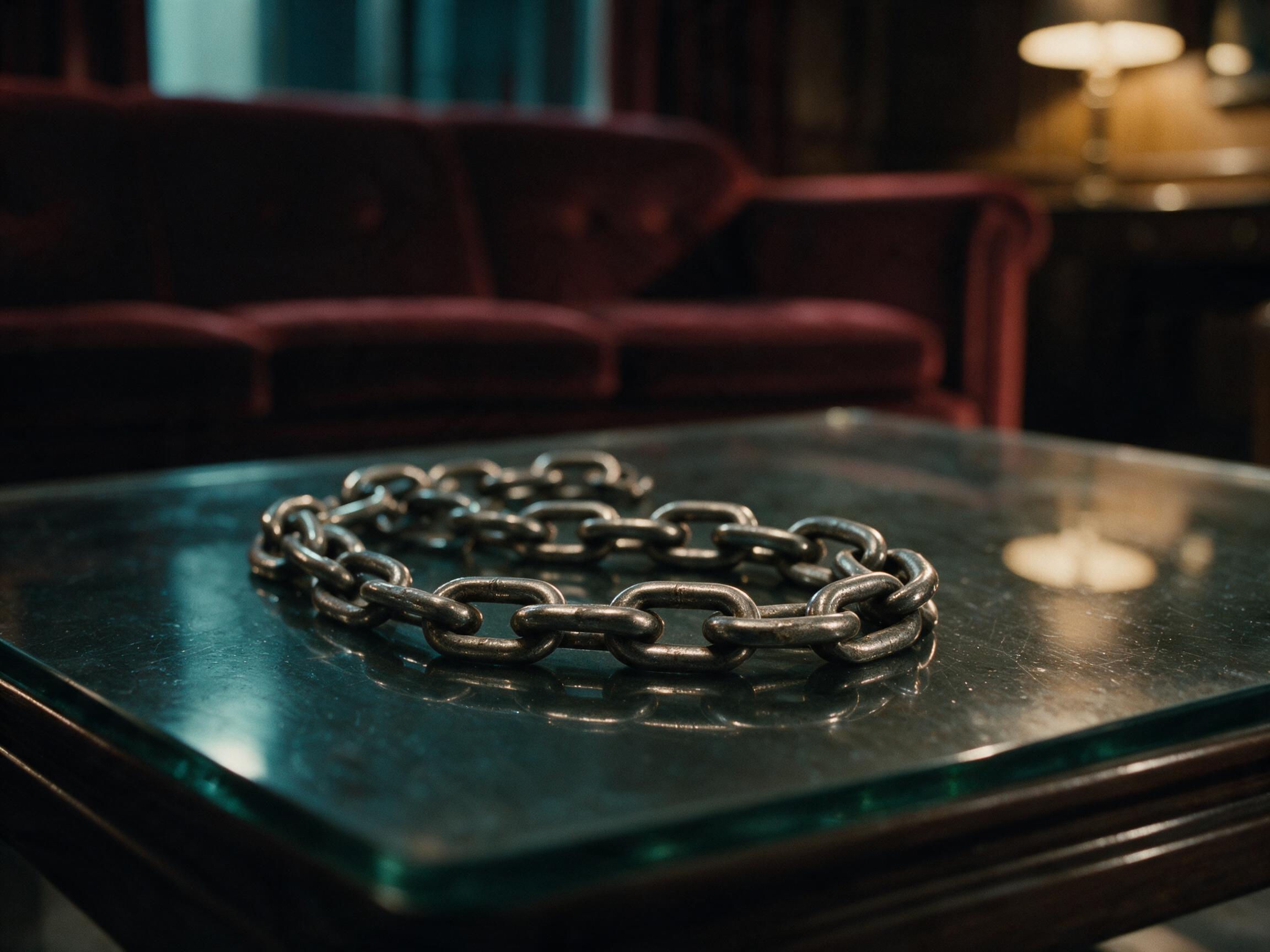
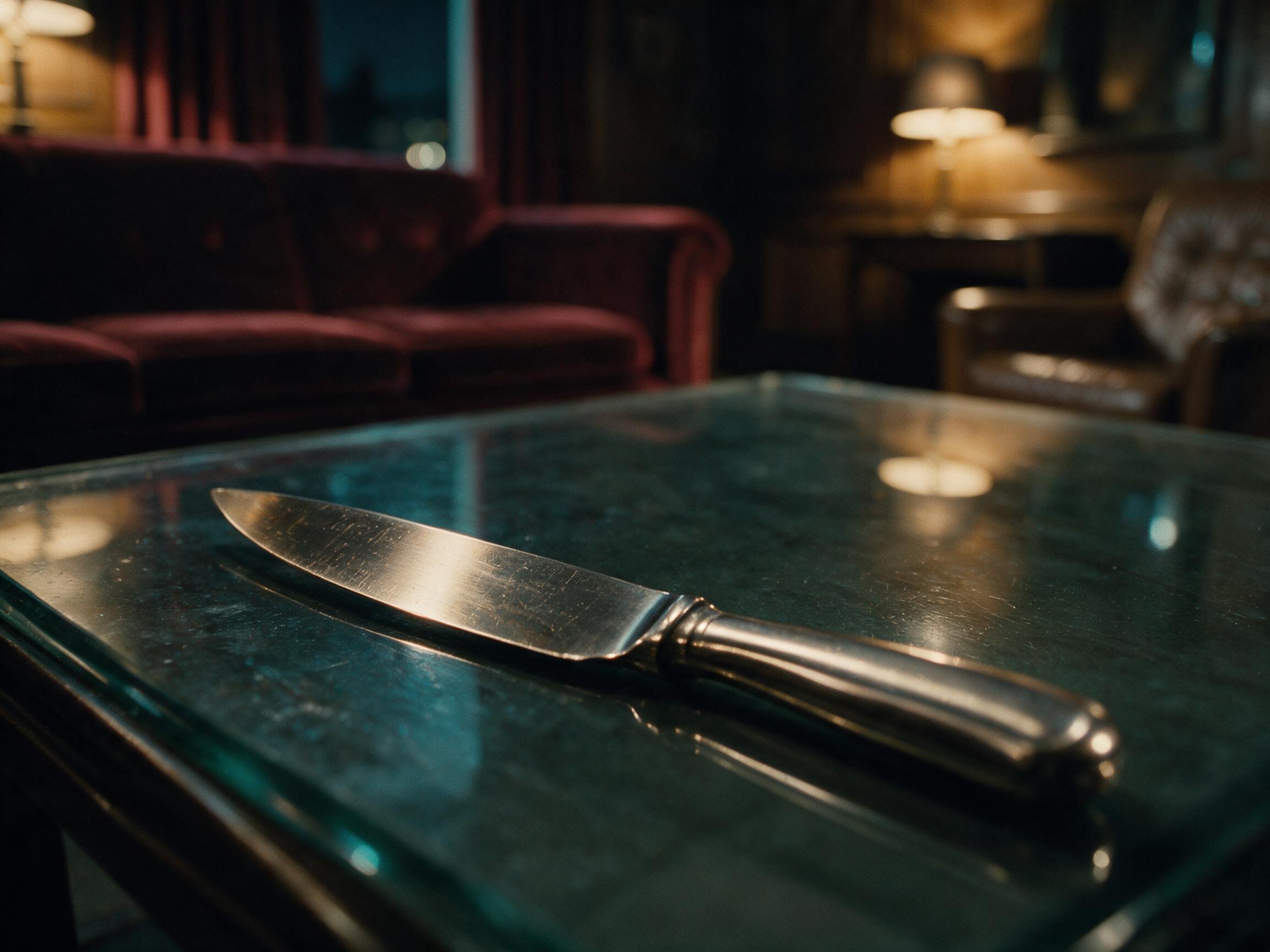
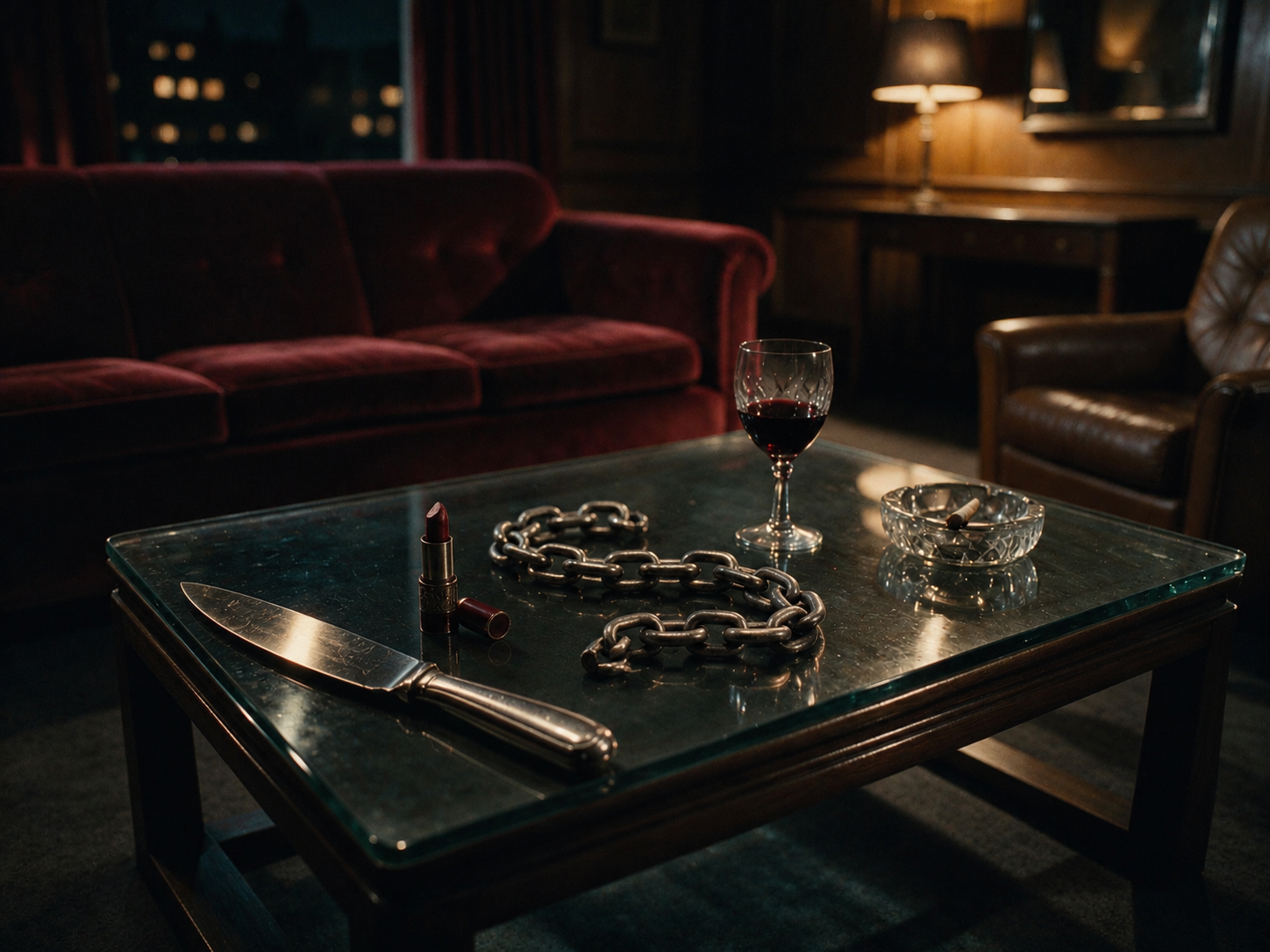
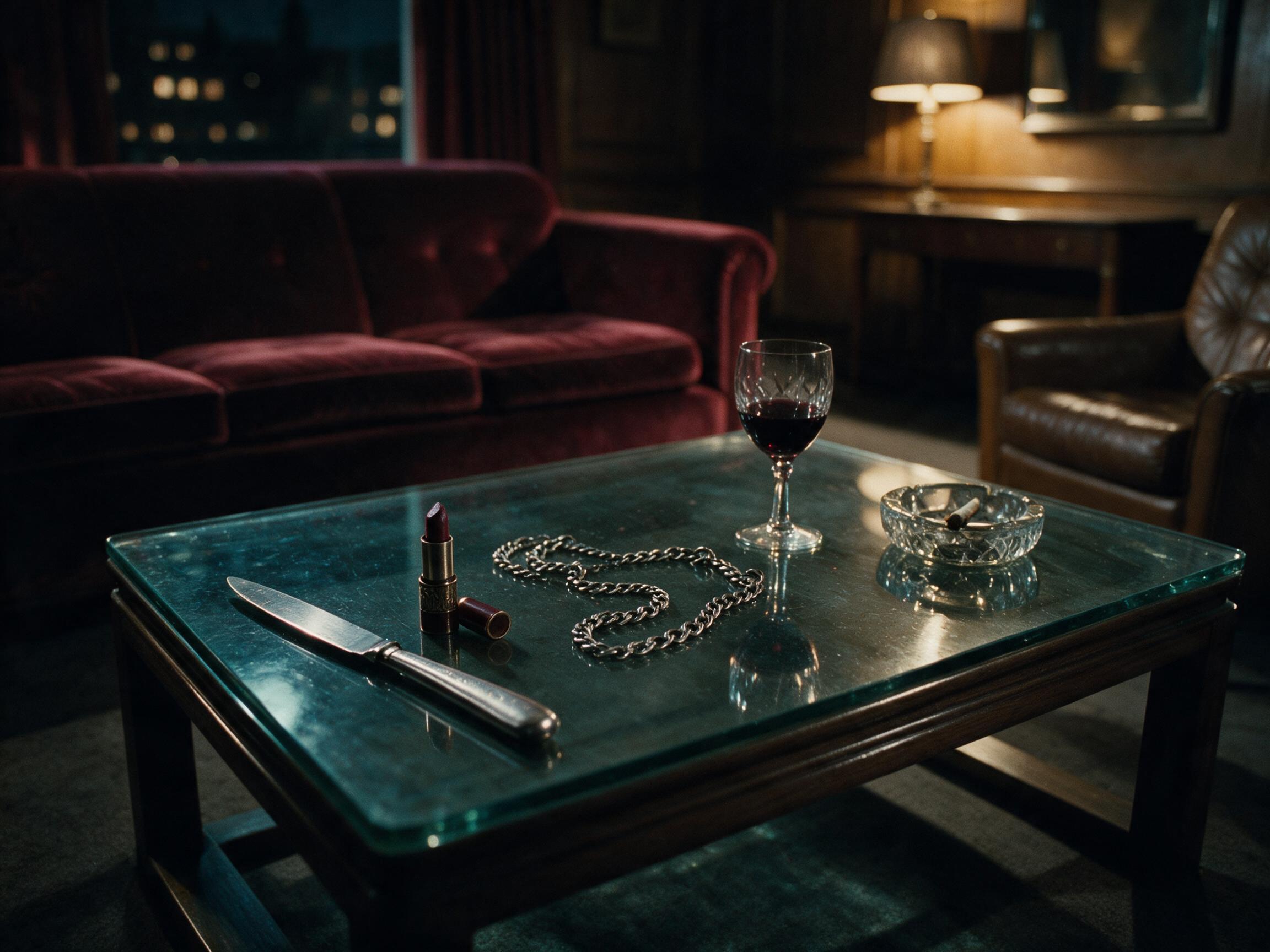
ENV_002 — REVERSE ANGLE FALSEHALO — SHE KEEPS A PREDATOR Create a completely new, photographically realistic reverse-angle cinematic still of the EXACT SAME late-1970s to early-1980s European luxury hotel suite shown in the attached ENV_001_MASTER reference image. Use the attached image as the primary and authoritative visual reference for the room's architectural identity, dimensions, furniture design, material textures, color palette, lighting sources, and spatial organization. This is NOT a redesign, reinterpretation, or new hotel interior. It is a different camera position inside the same physical room, photographed only moments after the original frame. **PRIMARY OBJECTIVE — TRUE REVERSE ANGLE** Physically relocate the camera toward the large window, slightly beside the left end of the burgundy velvet sofa, and rotate it approximately 150–170 degrees from the original camera direction, looking back into the room toward the previously unseen opposite wall. The resulting image must reveal a genuinely different side of the existing hotel suite. The original window-facing viewpoint must not be repeated, mirrored, or slightly reframed. Imagine a real cinematographer walking across the existing room with the camera, stopping near the window beside the sofa, turning around, and photographing the interior from that new position. Only the camera position and viewing direction change. The architecture, room dimensions, furniture positions, object identities, and lighting arrangement remain physically unchanged. **ARCHITECTURAL CONTINUITY** Preserve the exact dark walnut wall paneling from the reference, including its rectangular panel divisions, natural wood grain, dark reddish-brown tones, aged lacquer, and subtle surface imperfections. Maintain the same ceiling height, cream-colored ceiling, broad classical cornices, decorative molding, and restrained late-1970s hotel architecture. The room must retain the same believable proportions and sense of enclosed luxury. The previously unseen opposite wall should be revealed as a natural continuation of the existing walnut-paneled interior. Extend the established architectural language conservatively, using matching panel dimensions, cornice profiles, ceiling treatment, and materials. Do not invent another room, connecting corridor, bedroom, doorway, or additional window. Any previously unseen architectural details must remain minimal, understated, and compatible with the original space. **FURNITURE — EXACT IDENTITY AND POSITIONAL CONTINUITY** Preserve the same low, deep burgundy velvet three-seat sofa from the reference, with its rounded upholstered arms, thick seat cushions, softly curved silhouette, natural velvet nap, and slightly worn appearance. From the new viewpoint, the sofa should be seen primarily from its window-side end or rear three-quarter angle, positioned in the near foreground along the left side of the frame. Its orientation and physical location must remain unchanged. It is the camera that has moved around the furniture. Preserve the same rectangular coffee table with its dark wooden frame, thick greenish smoked-glass top, and lower shelf. The table must remain directly in front of the sofa, in the same position and orientation, now seen from the opposite direction. Its surface must retain the same imperfect reflections, subtle scratches, authentic glass thickness, and dark reflective character. Preserve the same tobacco-brown leather armchair with its broad cushioned backrest, rounded arms, aged leather folds, and dark wooden legs. The armchair remains on the opposite side of the coffee table, angled toward the sofa as in the original layout. Depending on the new viewing perspective, it should be seen from the side or rear three-quarter angle, with physically correct occlusion and proportions. On the original right-hand walnut-paneled wall, preserve the narrow dark wooden console and rectangular framed mirror. These objects remain attached to their original wall and must not be relocated to the newly revealed opposite wall. If the reverse camera direction places them near the edge of the frame or outside the field of view, preserve geometric accuracy rather than artificially repositioning them to make them visible. Maintain the same dark, slightly worn carpet beneath the seating arrangement, including its subdued texture, natural pile variations, and original relationship to the furniture. All visible objects must remain identical to those established in ENV_001_MASTER. **SPATIAL COMPOSITION** Horizontal 4:3 cinematic composition. A wide interior master shot with a natural 32–35 mm full-frame equivalent lens perspective. The camera is positioned approximately 1.5 meters above the floor, near the window and slightly to the side of the sofa. The near foreground contains the burgundy sofa's side or rear corner, with its fabric texture and rounded silhouette clearly recognizable. The glass coffee table occupies the middle ground, maintaining its original relationship to the sofa. The brown leather armchair appears farther into the room, preserving its conversational orientation. The background reveals the previously unseen opposite walnut-paneled wall, with the same period architectural language and ceiling moldings. A small peripheral glimpse of the original window-side architecture or curtain fabric may be visible at the extreme edge of the composition, only where physically consistent with the new camera position. Do not place the large nighttime window centrally in the background again. Preserve realistic architectural perspective, correct object scale, coherent floor geometry, and believable spatial depth. Furniture must overlap and occlude naturally according to the changed viewpoint. The room should feel like a real, continuous three-dimensional environment captured from a second camera position. This must be a substantially different reverse shot, not a near-duplicate of ENV_001_MASTER. **LIGHTING CONTINUITY** Maintain exactly the same nighttime conditions and practical lighting setup established in the reference. The original warm tungsten table lamps remain in their existing physical locations. The lamp beside the sofa continues to illuminate the nearby walnut paneling and velvet surfaces with soft amber light. The lamp on the console continues to cast warm directional illumination onto the adjacent wall, wood surfaces, and mirror. The faint cold blue-cyan city light continues to enter through the original window behind and beside the new camera position. From this reverse perspective, the cold window illumination may appear as a weak edge light or subtle cool spill across the furniture and room surfaces. Lighting direction, shadow falloff, reflections, and object highlights must respond naturally to the new viewing angle. Deep, realistic shadows remain in the corners and beneath the furniture, but the room's architecture and furniture contours remain legible. No additional lamps, artificial light sources, cinematic spotlights, exaggerated rim lighting, or unexplained illumination. **COLOR AND MATERIAL CONSISTENCY** Precisely preserve the established visual palette: Dark walnut brown, deep oxblood burgundy, tobacco-brown leather, antique gold, warm amber tungsten highlights, charcoal shadows, and restrained cold blue-cyan nighttime tones. Match the original velvet's tactile fibers, worn leather creases, natural wood grain, aged glass reflections, carpet pile, lamp shades, and subtle surface imperfections. Avoid newly polished or excessively restored surfaces. The luxury must feel old, expensive, intimate, slightly decadent, and genuinely inhabited over time, rather than styled for a contemporary hotel advertisement. **ATMOSPHERE AND CINEMATIC CHARACTER** A quiet, psychologically charged European luxury hotel suite at night, circa 1980. The atmosphere is intimate, decadent, and subtly threatening. A sense of concealed history and narrative anticipation, without any visible action or explicit evidence of violence. The room feels physically real, expensive, enclosed, and slightly oppressive. The visual language evokes the understated tension of European psychological and crime thrillers from the late 1970s and early 1980s. No exaggerated horror aesthetics, fantasy effects, theatrical staging, or artificial glamour. **PHOTOGRAPHIC REALISM AND ANALOG FILM TEXTURE** The final image must appear to be a genuine frame photographed on 35 mm motion-picture film around 1980. Natural film response, organic fine-to-moderate grain, subtle optical softness, authentic shadow density, realistic contrast roll-off, and restrained highlight halation around practical light sources. Slightly imperfect exposure and naturally subdued period colors. Grain must be integrated organically into the photograph, including the shadows, wood surfaces, fabrics, and illuminated areas. No digital oversharpening, hyper-detailed CGI textures, artificial bloom, exaggerated color grading, or modern cinematic teal-and-orange treatment. Maintain physically realistic depth of field with enough overall clarity to understand the room's architecture and spatial relationships. The photograph must feel captured through a real vintage cinema lens in an actual hotel interior, not generated as a pristine architectural visualization. **STRICT CONTINUITY AND CONTENT RESTRICTIONS** Completely empty room. No people, no human silhouettes, no animals, no visible reflections of people or animals. No knives, lipstick, chains, weapons, blood, cigarettes, or prominent narrative props. No newly introduced furniture, decorative objects, windows, doors, architectural openings, or additional rooms. Do not move, rotate, resize, recolor, replace, or redesign any existing furniture. Do not modify the mirror or console location. Do not change the original lighting positions or time of night. No modern hotel aesthetics, minimalism, contemporary electronics, glossy materials, commercial interior photography, or artificial set perfection. No mirrored duplication of the original photograph, no simple horizontal flip, no digital perspective warp, and no minor crop of the original angle. **FINAL IMAGE REQUIREMENT** A visually distinct reverse-angle establishing shot of the EXACT SAME physical hotel suite as ENV_001_MASTER. Architecturally consistent, spatially convincing, materially identical, and photographically authentic. The two images should feel like consecutive shots from the same 1980 European crime thriller, photographed within the same room, under unchanged lighting conditions. Horizontal aspect ratio 4:3.
Free to start · Generate videos and images with AI in seconds
More from this creator
More Seedream 5.0 images
См. все →