Image - 2026-09-28 10:55
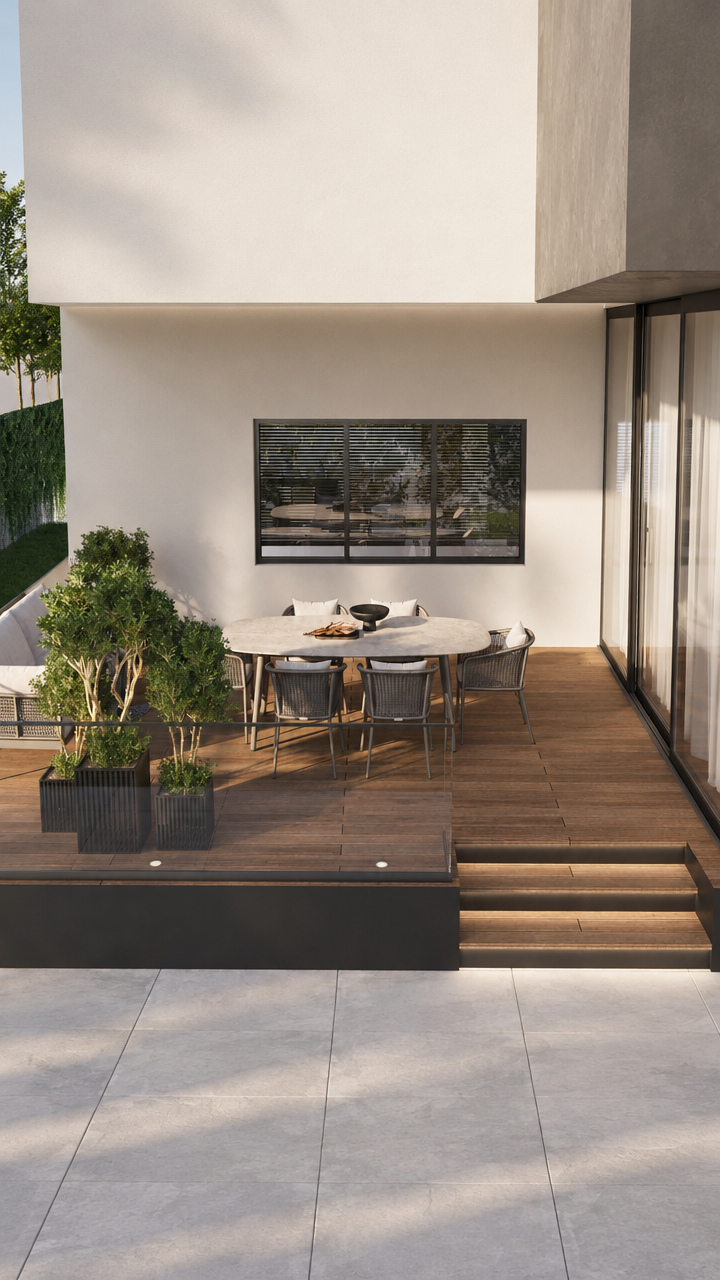
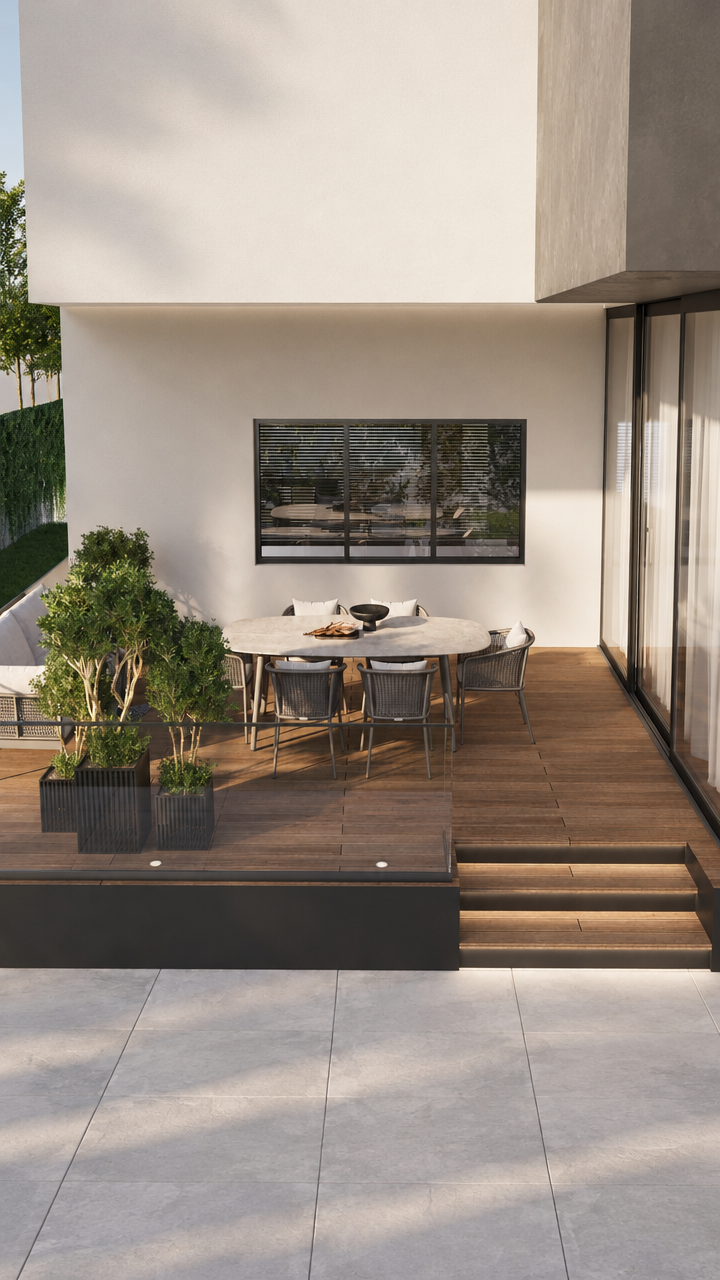
Reframe the attached photograph to a vertical 9:16 format (1080x1920) by extending the scene, not by squashing, stretching or simply cropping it. Keep the original camera position, lens perspective, horizon, vanishing points, light direction, exposure and colour palette exactly as in the source. Everything already in the frame must remain identical in shape, proportion, material and placement. COMPOSITION Use the central part of the image as the base: the white stucco wall with the black-framed horizontal window, the oval dining table with the six chairs, the olive trees in planters, the glass balustrade, the illuminated steps and the left part of the black sliding glass facade. Trim the far left (lawn, ivy hedge, distant trees, the outdoor sofa may be partially cropped) and the far right (the second sliding door and the dark facade edge) to fit the vertical format. Do not redraw the trimmed elements; the frame simply ends at the new left and right edges. KEEP UNCHANGED The white stucco wall with the black aluminium-framed window with its horizontal blinds and interior reflections; the oval dining table with a pale stone top and light wooden legs; the dark grey woven rope dining chairs with white cushions; the black bowl and wooden board on the table; the multi-stem olive trees in black fluted planters; the outdoor sofa with white cushions and a rope-woven frame; the glass balustrade with a slim metal cap; the dark brown hardwood decking with visible plank seams; the steps with warm LED strips under each tread; the black plinth wall with the recessed spot light; the black-framed sliding glass doors with white sheer curtains behind them. The dining group, the olive trees and the illuminated steps are the main subjects. BUILD THE VERTICAL FRAME Extend upward: continue the white stucco wall and the overhanging upper volume of the house in correct perspective, with a soft clean sky or the underside of the overhang only where geometry demands it. Add no extra windows, balconies or decor. Extend downward: continue the light grey large-format stone paving in front of the terrace in correct perspective, with the same soft sun-and-shadow pattern and the same warm-neutral tone. The LED glow on the lowest step continues naturally onto the paving. Add no new furniture, plants, objects or people. Vertical lines (wall edges, window frames, door frames, planters) stay perfectly straight. No wide-angle distortion, no stretched objects. The new areas match the original in grain, sharpness, colour and exposure, with no visible seam. LOOK This is a real photograph, not a 3D render, not CGI, not AI art. Warm low-angle golden-hour sunlight with soft long shadows across the decking and gentle warm glow from the step LEDs, matching the original light. High-end professional digital cinema image, large-format cinematic sensor character, extremely clean but organic photographic detail, wide dynamic range, exceptionally smooth highlight rolloff on the white wall and the sunlit deck, subtle film-like colour separation, deep but detailed shadows, refined micro-contrast, natural lens rendering, gentle natural depth of field with the main subjects crisp and the far background softly falling off, restrained saturation, natural true-to-life material tones of wood, stone, rope, foliage and stucco, premium theatrical image quality, subtle organic sensor texture and fine natural grain, physically realistic light response. Image captured through the camera, camera itself not visible. AVOID No text, no logos, no labels, no watermarks, no technical overlays, no UI, no metadata, no black bars or borders, no blurred fill bars at the top or bottom, no duplicated or extra furniture, no warped lines, no artificial-looking foliage, no oversaturated greens, no HDR look, no plastic-smooth surfaces, no over-sharpening halos, no CGI or painterly look.
Free to start · Generate videos and images with AI in seconds
More from this creator

More Gpt Image 2.5 images
См. все →