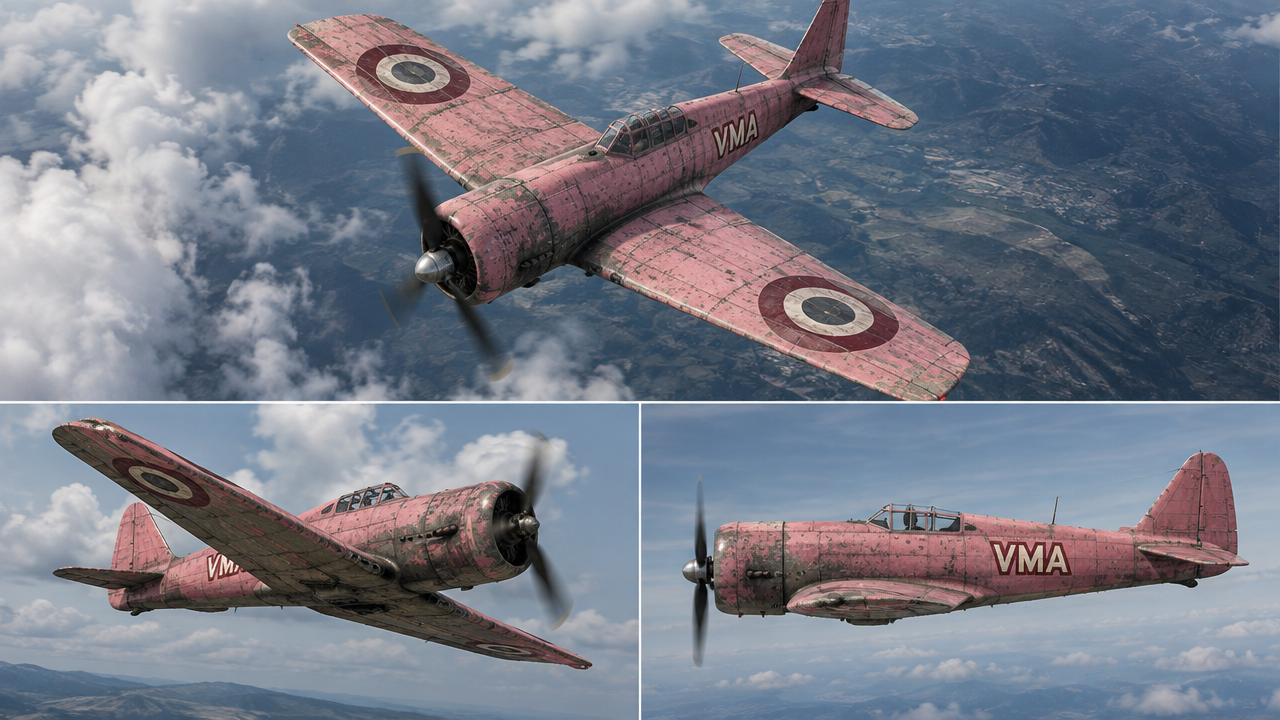
Image - 2026-09-24 17:02
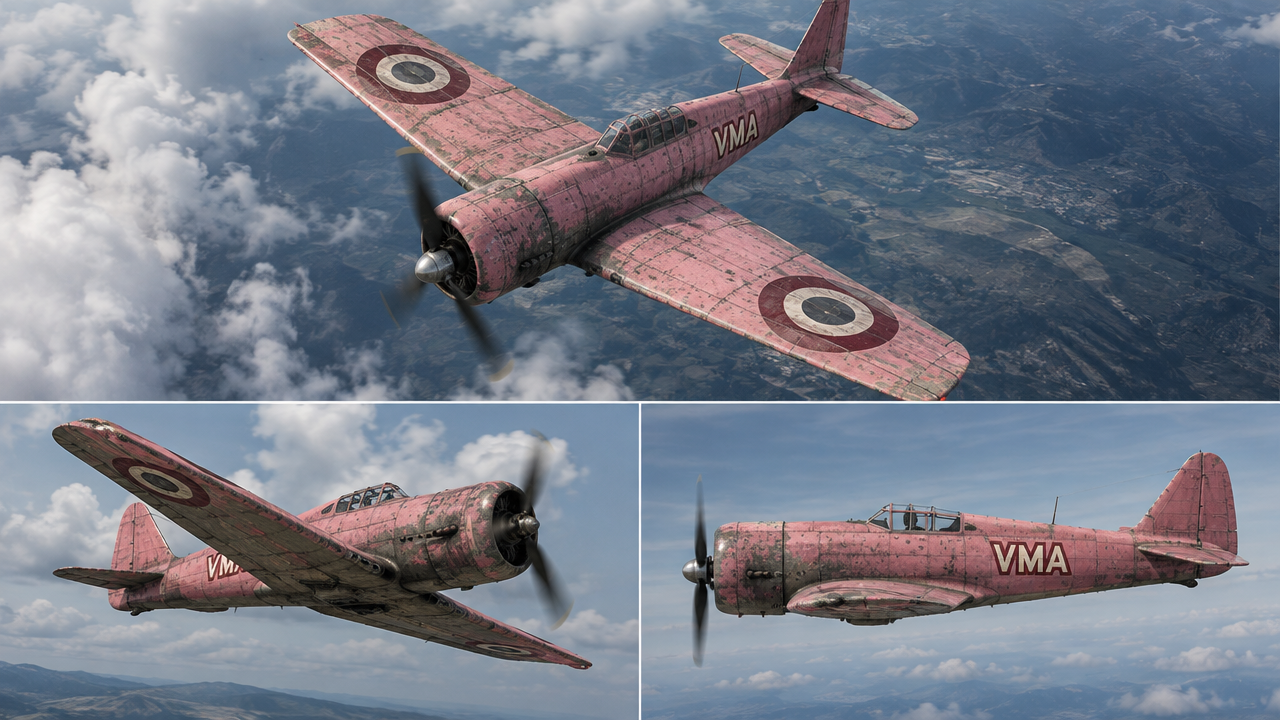
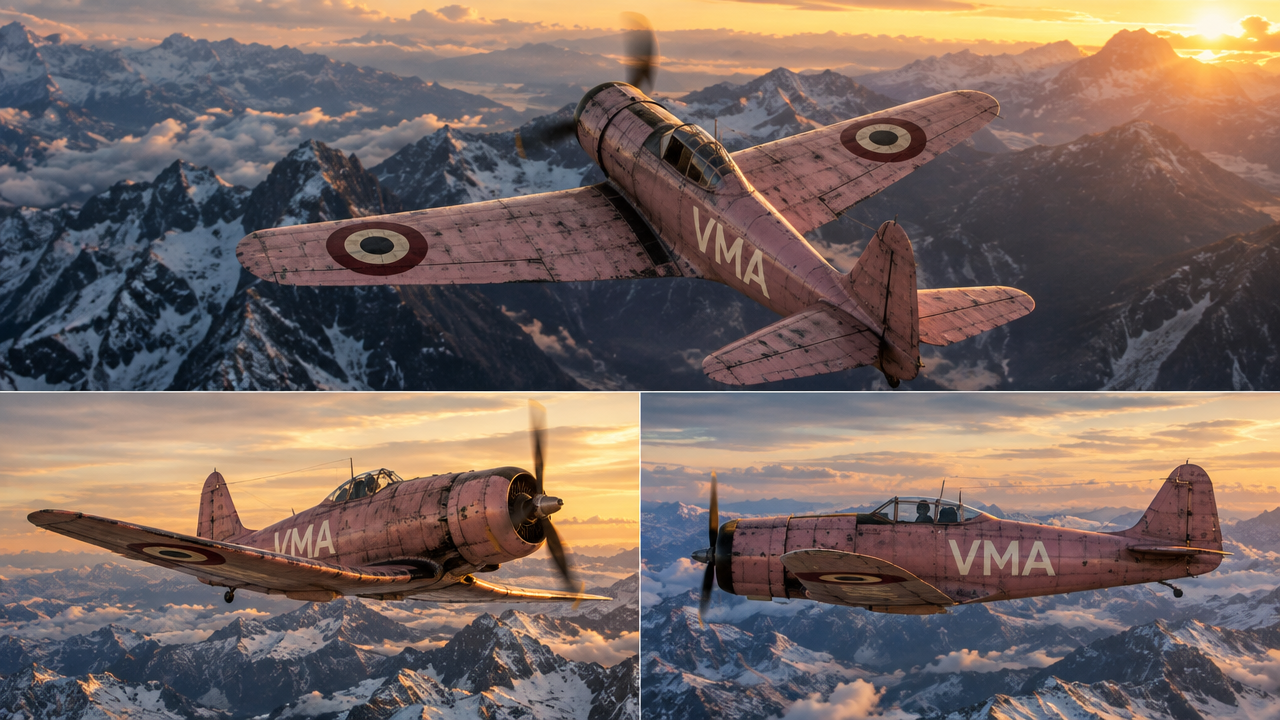
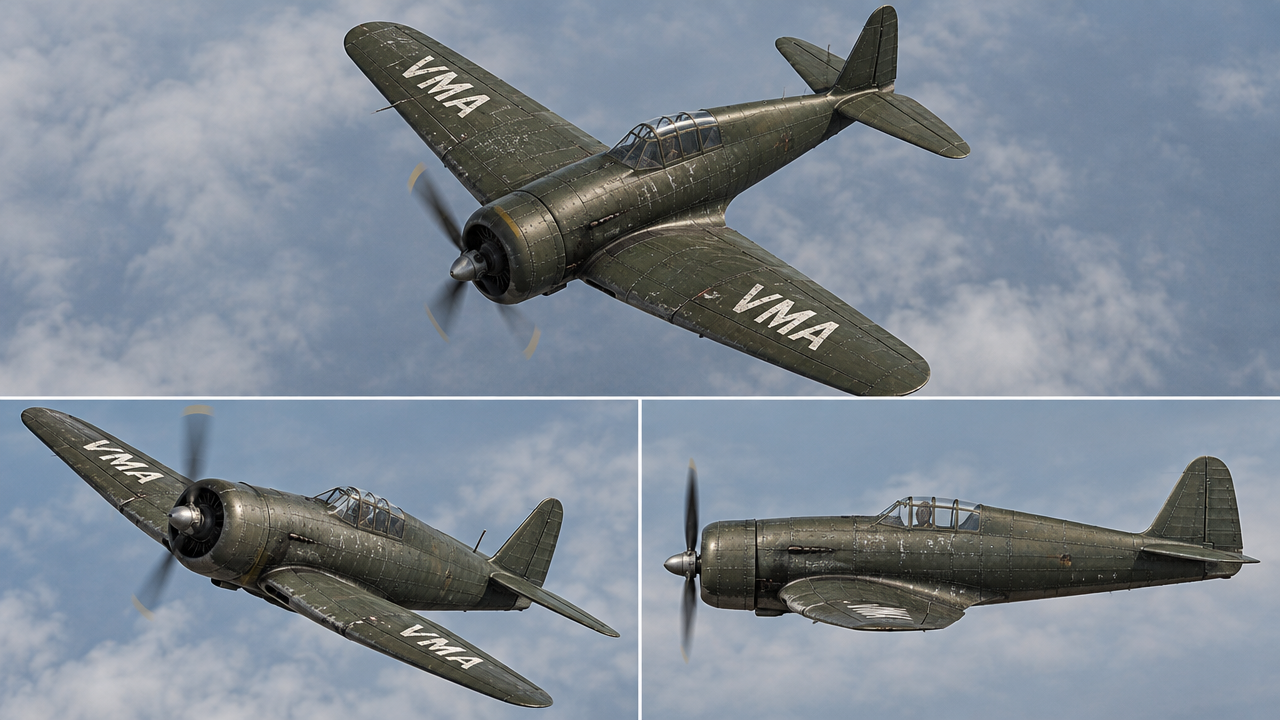
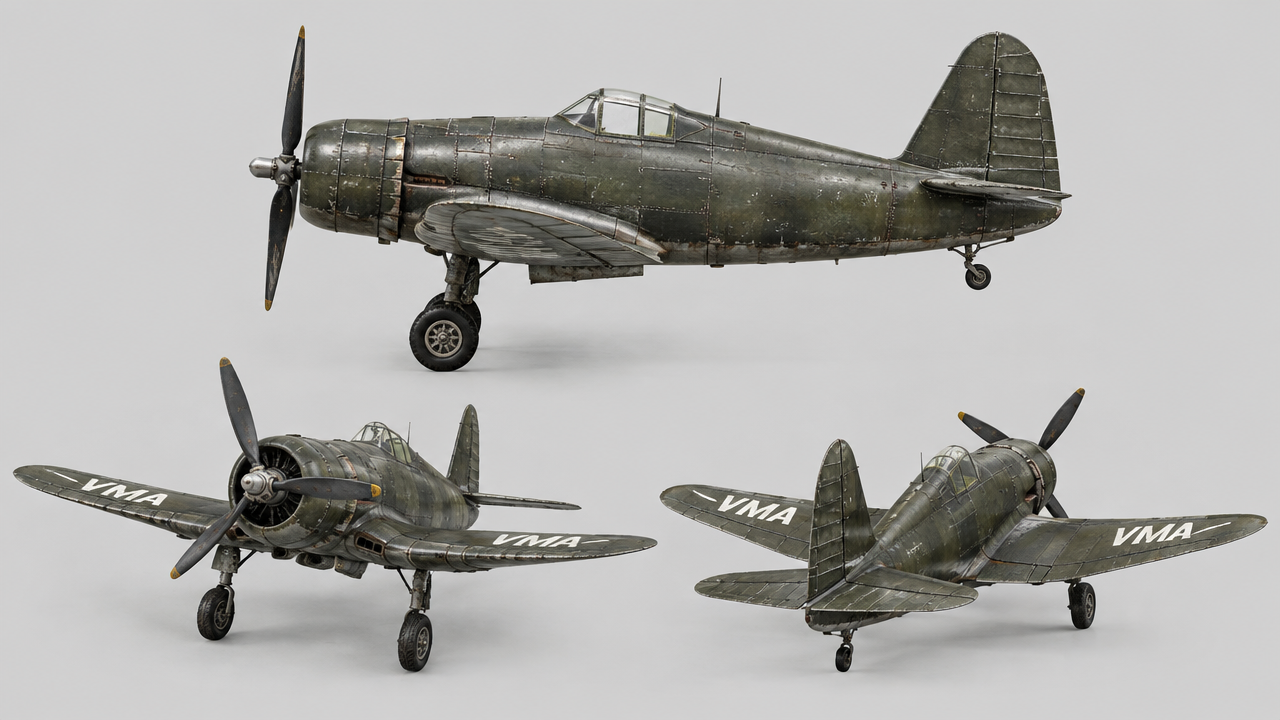
Use the provided aircraft reference as the exact base design and preserve its aircraft geometry, proportions, silhouette, cockpit, propeller, wings, tail and overall construction. Create a highly detailed photorealistic aircraft turnaround showing the SAME aircraft from three airborne cinematic views: 1. high three-quarter top view, 2. dynamic three-quarter side view while banking in flight, 3. clean side profile in flight. The aircraft must remain completely consistent across all three views. IMPORTANT — NEW AIRCRAFT LIVERY: Transform the aircraft into a distinctive premium pink custom livery. The primary aircraft paint is a muted dusty military pink / desaturated rose pink, NOT bright candy pink and NOT glossy plastic pink. The aircraft should look like a real old military aircraft that received a custom pink paint job many years ago and has been heavily used. The pink paint is: - faded by sunlight, - scratched, - chipped, - worn around panel edges, - partially exposing dark olive-gray original paint and bare metal underneath, - slightly dirty, - weathered by snow, rain, oil and exhaust, - uneven in places, - naturally faded and oxidized. The result should resemble an extremely detailed premium video-game aircraft skin, but photographed as a REAL physical aircraft. Think of the visual quality of a high-end game skin translated into real-world physical materials: beautiful color design, strong recognizable silhouette, subtle graphic elements, heavy believable wear, real paint thickness, real scratches, real metal underneath. WING GRAPHICS: REMOVE ALL "VMA" TEXT FROM THE WINGS. There must be NO LETTERS or words on the wings. Instead, place large circular painted markings / roundels on the upper surfaces of both wings. The roundels should be visually distinctive and stylish: concentric circles with a carefully designed color combination that complements the dusty pink aircraft. Use a combination of: deep burgundy, dark desaturated red, cream/off-white, and subtle dark gray. The circular markings should look like REAL PAINT applied directly to the aircraft. They must be slightly weathered: scratched, faded, chipped, with irregular edges caused by age and use. The roundels must be symmetrical and cleanly designed while still showing realistic wear. Do NOT make them look like stickers. Do NOT make them look like decals floating above the surface. They must be physically painted onto the metal wings. VMA BRANDING: Move the "VMA" branding entirely onto the SIDE OF THE FUSELAGE. Place one elegant "VMA" wordmark prominently on the side of the aircraft fuselage, behind the cockpit and above the wing root. The VMA branding should look like a professionally designed aircraft livery / custom racing-team style wordmark. The letters must be: VMA Exactly three uppercase letters. Perfectly spelled. Perfectly readable. Straight and clean. Strong geometric typography. Premium custom branding. Integrated naturally into the aircraft's side graphics. The VMA wordmark should have a subtle contrasting treatment, for example: cream/off-white lettering with a dark burgundy outline or shadow. The branding should feel like part of the aircraft's original paint scheme, not a modern digital sticker. The VMA logo should be slightly weathered along with the surrounding paint, with tiny scratches and faded areas. NO VMA TEXT anywhere else on the aircraft. NO additional words. NO numbers. NO random letters. NO military insignia. NO flags. NO logos other than VMA. NO text on the wings. AIRCRAFT MATERIAL DETAIL: Extremely detailed realistic physical construction. Visible: individual rivets, overlapping metal panels, panel seams, fasteners, scratches, paint chips, fine dents, oxidized metal, worn edges, oil stains, exhaust soot, dirty engine cowling, subtle corrosion, weathered glass, realistic rubber, worn leather, aged metal surfaces. The pink paint should have realistic physical thickness and wear. In heavily damaged areas, reveal layers underneath: pink paint, older dark olive paint, primer, bare metal. Do NOT make the weathering random or excessive. It must follow realistic wear patterns around: panel edges, rivets, engine area, cockpit, wing roots, leading edges, maintenance access panels. The aircraft should feel old, heavily used and mechanically functional. FLIGHT: The aircraft is airborne in every view. Landing gear fully retracted. Propeller spinning naturally with realistic subtle motion blur. No aircraft standing on the ground. No pilot visible. No additional aircraft. PHOTOGRAPHIC STYLE: This is a REAL aircraft photographed with an extremely high-end professional digital cinema camera. NOT CGI. NOT a 3D render. NOT concept art. NOT an illustration. NOT a game screenshot. high-end professional digital cinema image, large-format cinematic sensor character, extremely clean but organic photographic detail, wide dynamic range, exceptionally smooth highlight rolloff, rich natural color separation, deep but detailed shadows, refined micro-contrast, natural lens rendering, subtle organic sensor texture, physically realistic light response, premium theatrical image quality. Extremely realistic material response. The aircraft must look physically tangible enough that every rivet, scratch, paint layer and piece of metal could be photographed in real life. CINEMATIC AIRBORNE PRESENTATION: Subtle high-altitude atmosphere, soft clouds, cold blue-gray sky, natural sunlight, realistic reflections, subtle atmospheric perspective. The aircraft remains sharply detailed and clearly readable in every view. The final result should feel like a premium cinematic aircraft design sheet for a fictional blockbuster film or AAA game, but photographed as a real physical aircraft. NO UI. NO labels. NO captions. NO technical annotations. NO watermark. NO metadata. NO extra text. NO additional logos.
Free to start · Generate videos and images with AI in seconds
More from this creator

More Gpt Image 2.5 images
См. все →