Image - 2026-09-05 16:25
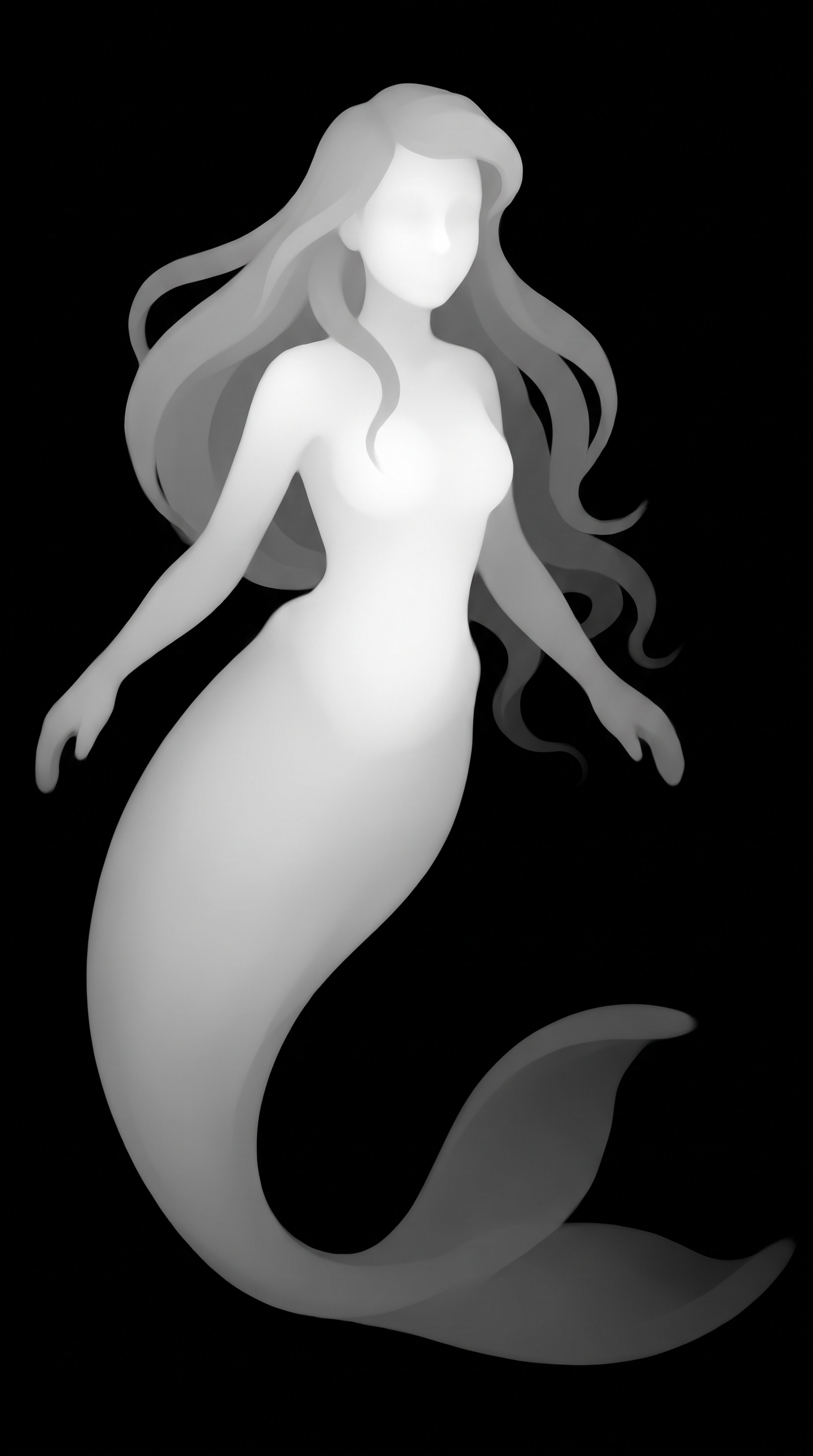
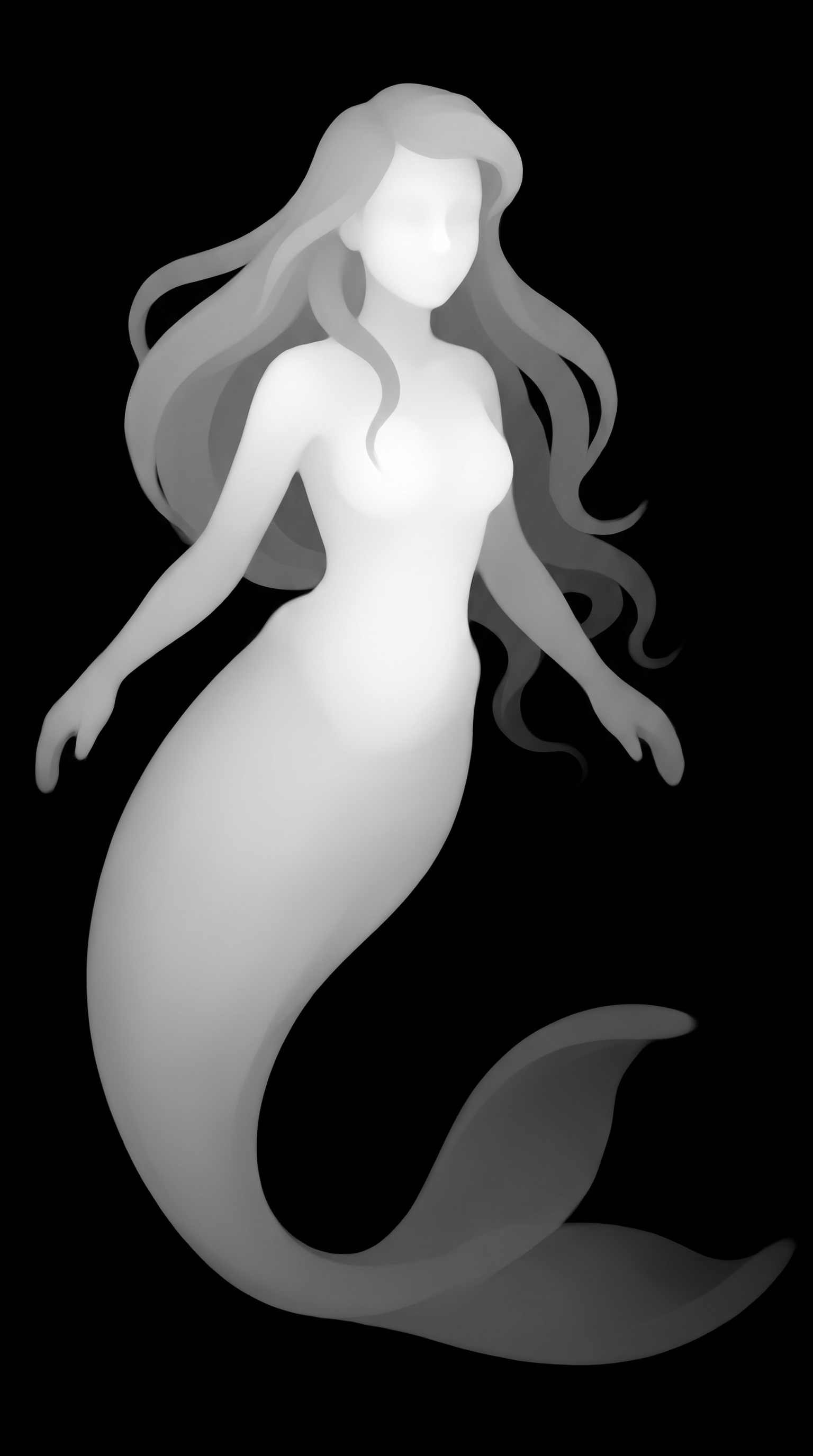
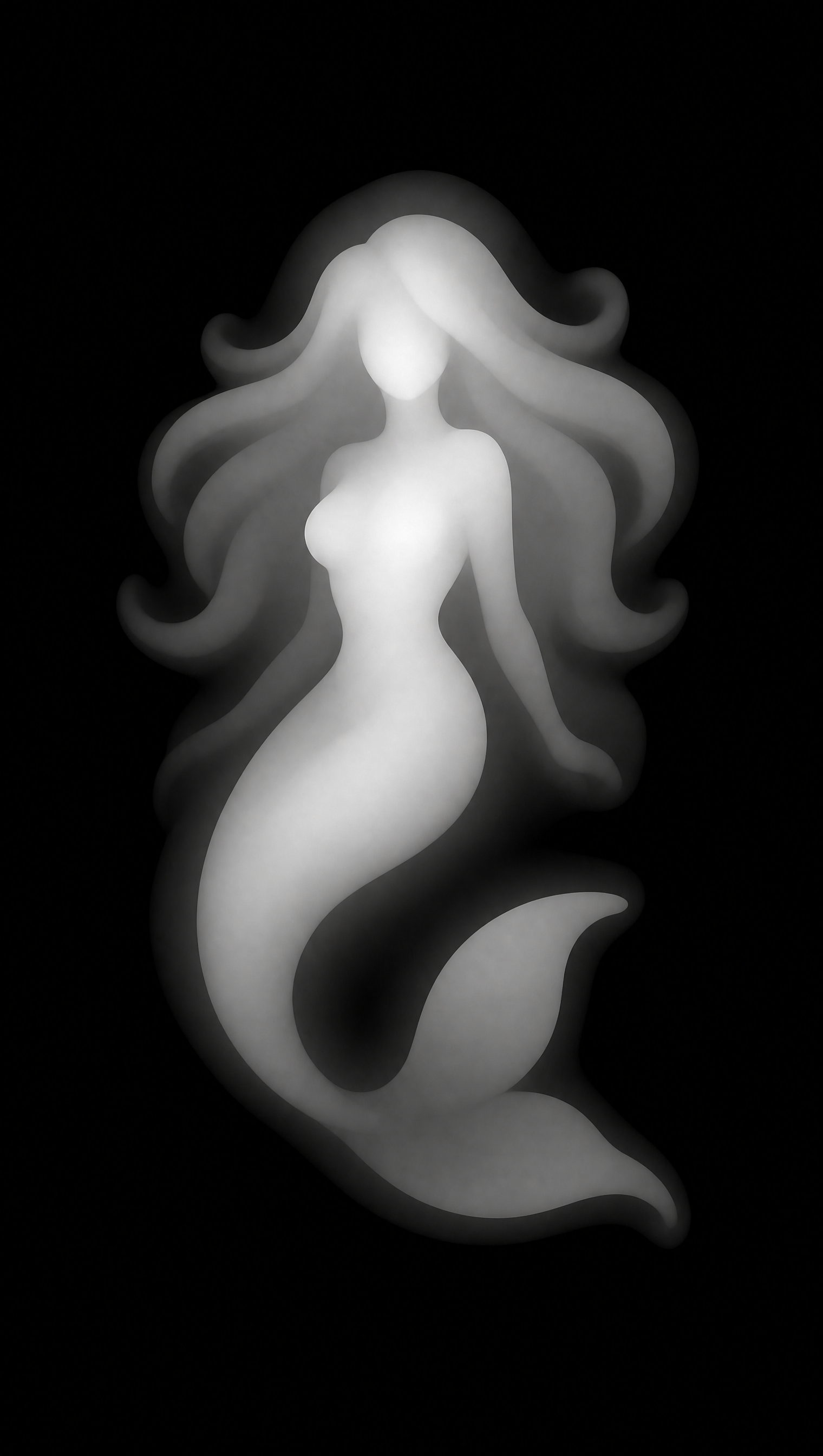
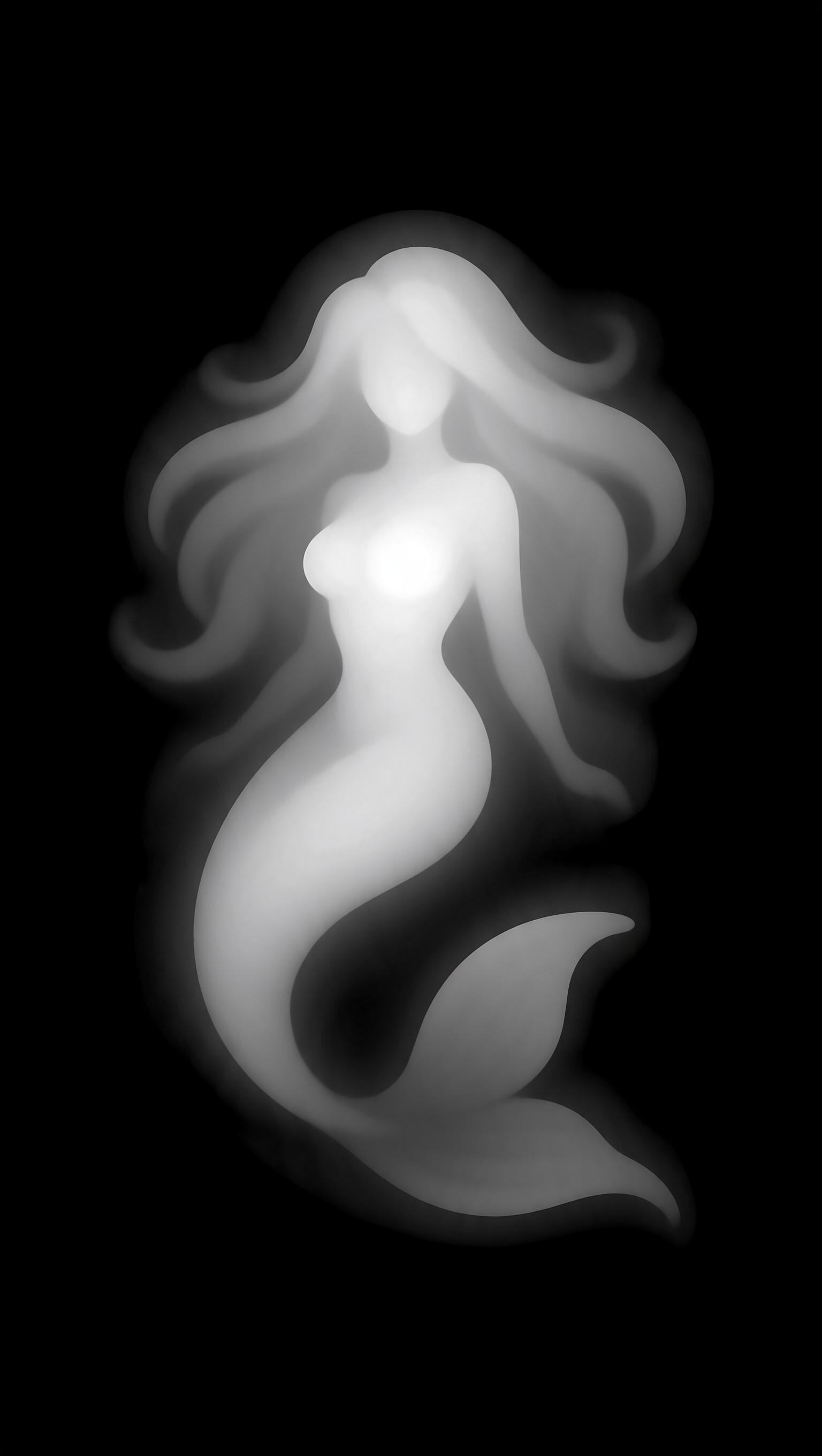
Create a smooth, high-contrast grayscale DEPTH MAP for stereogram (SIRDS) generation based on this subject: a graceful mermaid with a flowing tail and long flowing hair. Shape, Anatomy & Silhouette Specifics (CRITICAL): Clean, continuous, rounded curved silhouette line with NO clutter overlapping the main foreground shapes. Any secondary, trailing, or background elements must flow cleanly behind or away from the main body, leaving the primary foreground completely clear and defined. The object's OUTER silhouette must have a clearly READABLE edge against the solid black background — clean and defined, but NOT razor-sharp or harsh. Let the volume gently round off near the border, so the edge reads clearly while the body remains fully rounded in depth (readable border + soft volumetric falloff). Volumetric 3D Rule (IMPORTANT): The object must look three-dimensional, organic, and rounded, NOT flat. Render MODERATE, gentle, soft rounded 3D volume across the entire silhouette, brightest along the central raised mass and smoothly darkening toward the lateral sides to model a naturally rounded physical body. The brightest core must be a soft glowing gradient (a rounded 3D bulge), NOT a flat solid white fill; maintain a continuous, smoky/foggy internal falloff for maximum volumetric roundness. Depth Layering & Occlusion Separation: Strictly prevent overlapping elements from fusing into a single flat mass: Foreground focal elements (e.g. face, chest, front features) must be distinctly separated in brightness from adjacent overlapping framing elements (e.g. hair, hood, mane, armor, wings). Layer Hierarchy: Overlapping, surrounding, or secondary framing elements must be rendered a half-tone darker than the primary prominent foreground structure to preserve clear spatial depth. Distant / Receding Limbs & Details: Any background limbs, back hair, tails, wings, or structures positioned further away from the viewer MUST be rendered distinctly darker (lower luminance) than the main torso/body to prevent them from sticking or blending into the front plane. Key Composition & Framing: Isolate ONLY the specified subject's silhouette, cleanly removing any background elements, ground planes, frames, borders, or unrelated details. Sizing & Scale: The subject MUST occupy a maximum of 2/3 (66%) of the total canvas both horizontally and vertically. Leave generous, wide empty negative space all around the silhouette. Perfectly centered composition on a solid pure black background (RGB: 0,0,0). Depth & Luminance Mapping: Use the FULL continuous tonal range from pure black to pure white for maximum depth separation. Nearest / Most Prominent Elements (BRIGHTEST WHITE, #FFFFFF): The parts physically closest to the viewer. Mid-Depth Elements (GRADUAL MID-GRAYS): The receding sides, secondary layers, and intermediate structures fading smoothly to dark grays. Distant / Furthest Parts of Object (DEEPER DARK GRAYS): Receding extremities and background features positioned behind the main body mass. Furthest Background (PURE BLACK, #000000): The entire negative space surrounding the subject. Technical Requirements for Stereograms: Render strictly as a continuous, banding-free 8-bit or 16-bit grayscale luminance depth gradient that gives the object a rounded, volumetric 3D shape. Smooth, soft transitions between depth layers with zero noise, zero grain, and NO visible steps, bands, artifacts, or posterization. Edges should be slightly soft/anti-aliased to prevent jagged harsh lines, maintaining a natural volumetric feel. Absolutely NO colors, NO surface textures, NO lighting highlights/shadows, NO cast shadows, NO glow/halo around the object, NO text, and NO fine surface details — ONLY pure height/depth encoding via grayscale brightness.
Free to start · Generate videos and images with AI in seconds
More from this creator

More L images
См. все →