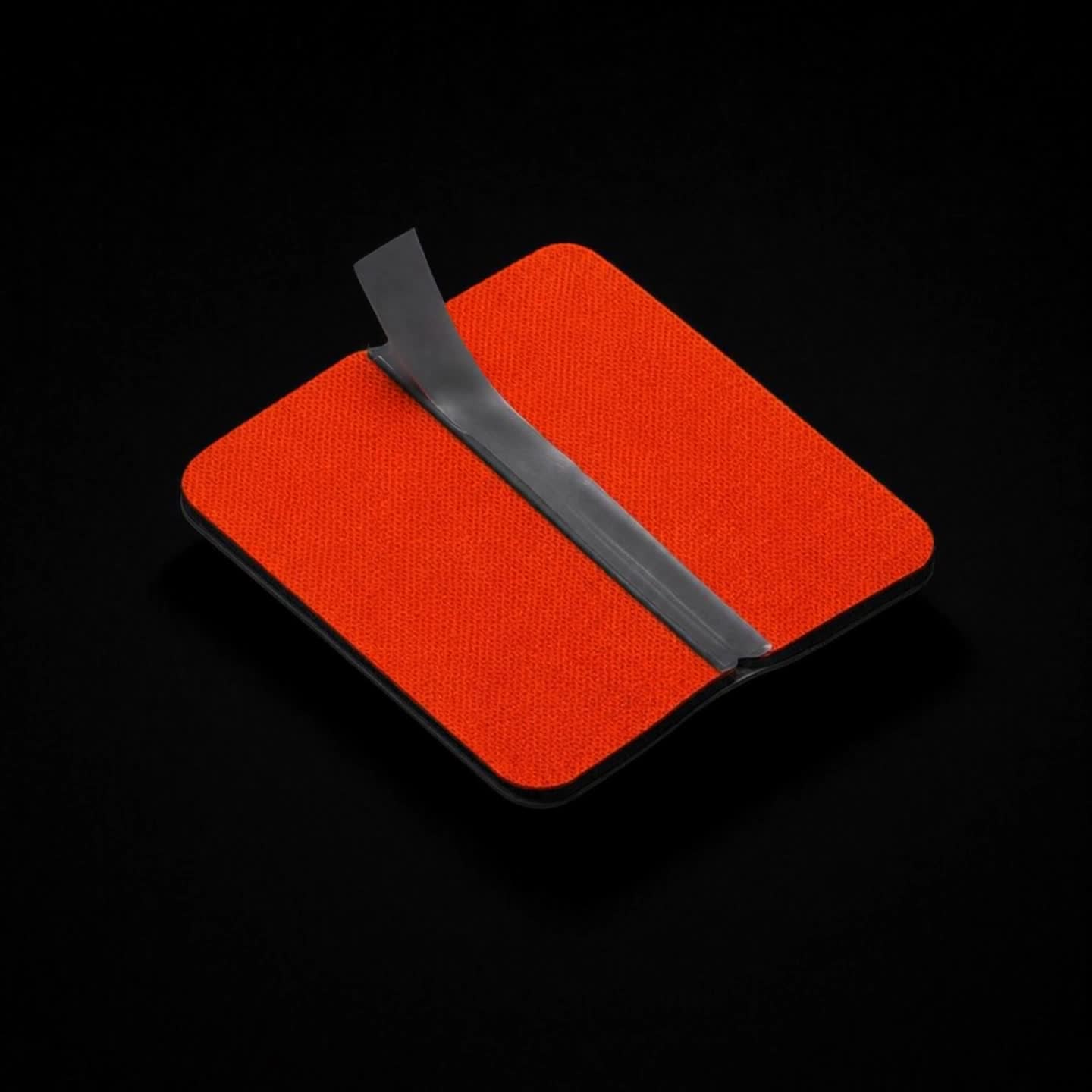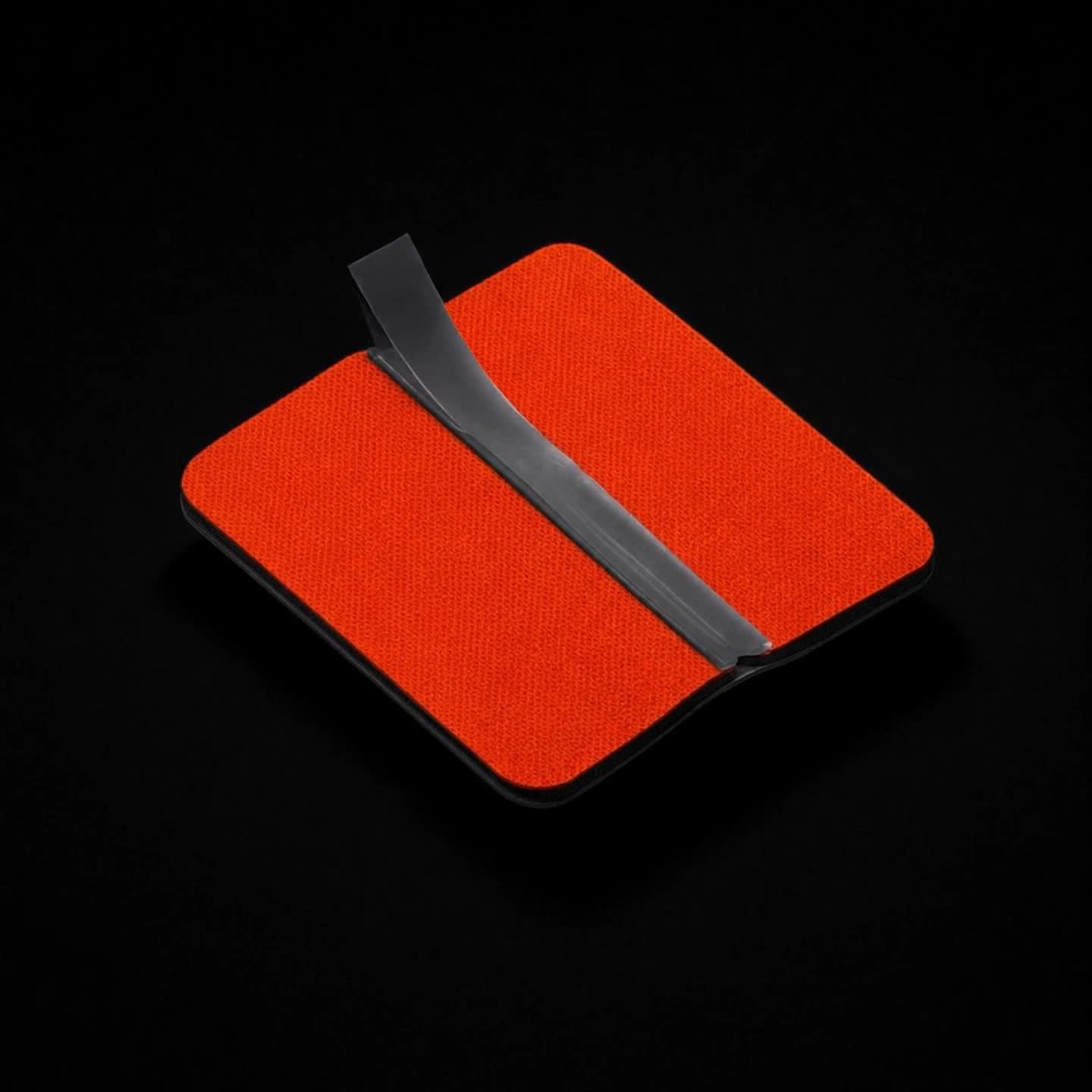
The seam-sealing tape must follow the true geometric centerline of the fabric panel, exactly as i...
The seam-sealing tape must follow the true geometric centerline of the fabric panel, exactly as in the reference animation. It runs diagonally in screen space from the exact midpoint of the far upper-left edge of the fabric toward the exact midpoint of the near lower-right edge. The tape passes directly through the geometric center of the panel and divides the orange fabric into two equal symmetrical halves. The tape is not positioned vertically relative to the frame and does not run from corner to corner. Its position must be calculated relative to the fabric panel’s perspective. The near lower-right end of the tape remains permanently attached at the exact midpoint of the front edge. The bonded section extends from this front midpoint toward the center of the fabric. At the beginning, approximately 60–65% of the tape is already flat and bonded to the fabric. Only the far upper-left 35–40% is raised above the surface. The free end extends slightly beyond the far edge of the panel and points gently upward and backward toward the upper-left. The raised section forms one long, smooth natural curve. It must not stand vertically, fold sharply or bend sideways. During the animation, the contact boundary moves progressively from the center of the panel toward the far upper-left edge. The raised section becomes gradually shorter until the entire tape is bonded flat. The tape must never slide laterally or longitudinally. Its centerline, width and endpoints remain precisely aligned with the central seam throughout the movement. Only the vertical curvature and contact area change. The tape maintains a constant width of approximately 10–12% of the fabric panel width. The two visible orange fabric areas on either side remain equal during the entire animation.

Free to start · Generate videos and images with AI in seconds
More from this creator