Image - 2026-07-18 21:42
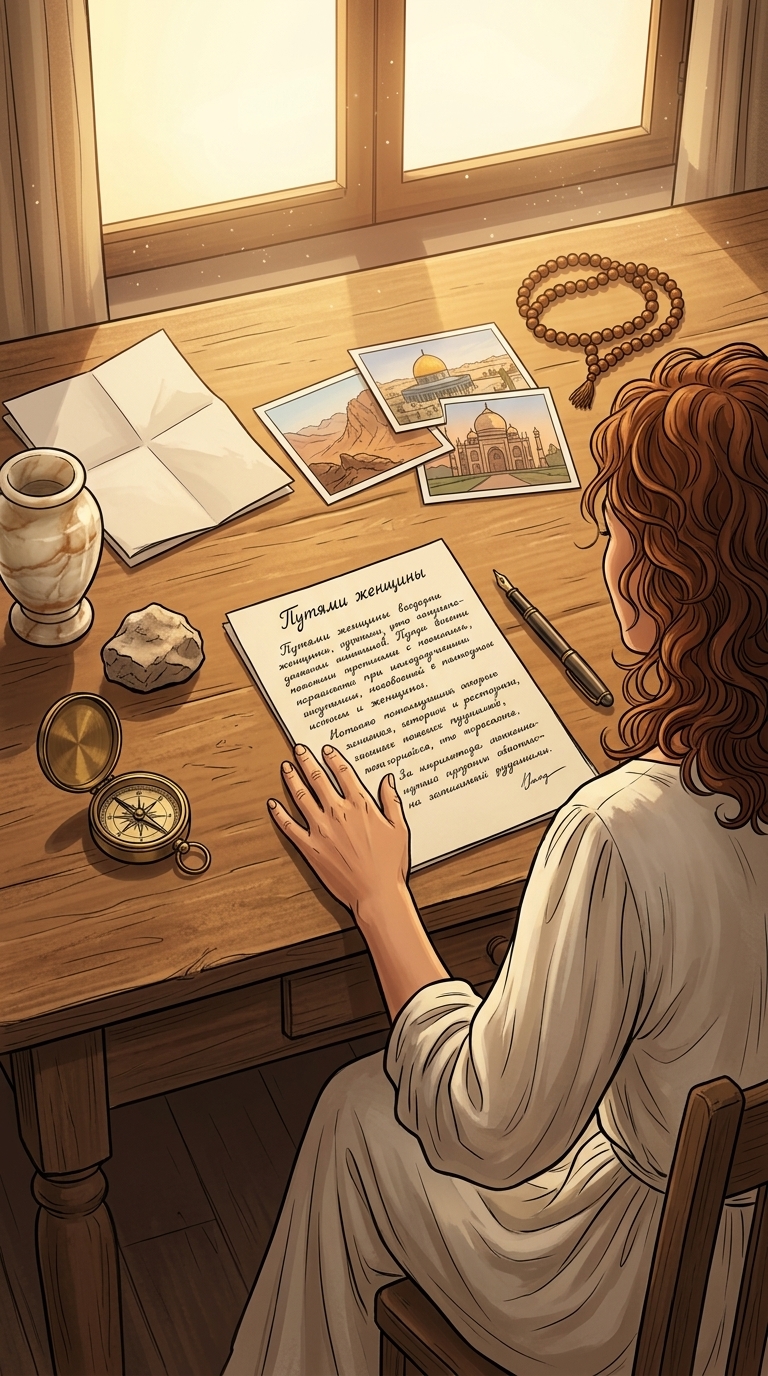
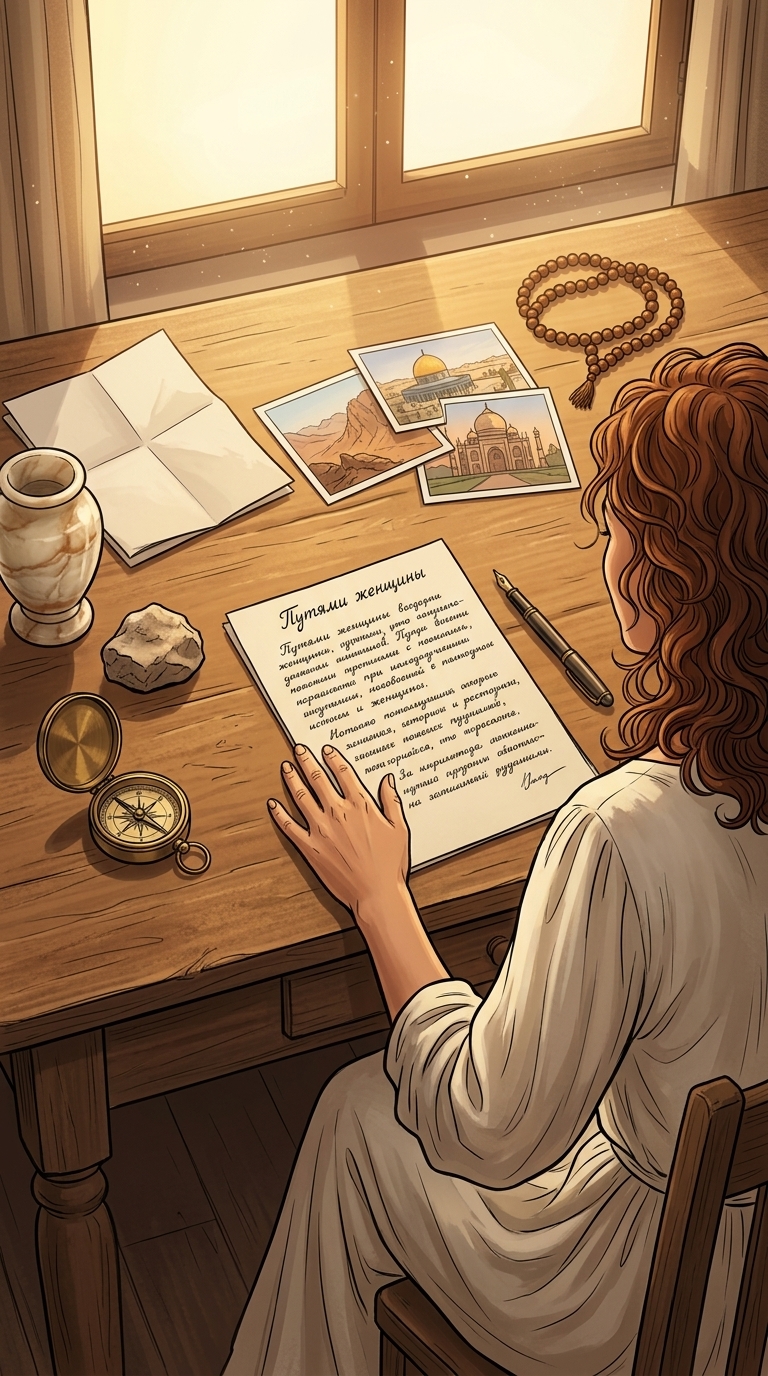
Art style: Cinematic Photorealistic Comic. A vertical 9:16 cinematic composition inside a quiet timeless writing room during the final hour before sunset. Warm golden light enters through a large wooden-framed window positioned behind the writing table, creating long soft rays filled with naturally floating dust particles. The atmosphere is peaceful, intimate, contemplative, and deeply human. The same woman from the previous scenes sits quietly at a century-old solid oak writing desk with visible grain, worn edges, and subtle imperfections that reveal years of use. She is viewed from slightly behind and above her right shoulder, allowing both her figure and the entire tabletop composition to remain clearly visible. She wears the same flowing ivory linen dress from the previous scenes. Her long chestnut-brown hair falls naturally over one shoulder. Her posture is relaxed, leaning slightly toward the manuscript with quiet concentration. One hand rests gently upon the manuscript while the other loosely holds a vintage fountain pen above the page as if she has paused between thoughts. The tabletop tells the story. At the center of the desk, closest to the woman, lies the handwritten manuscript titled «Путями женщины». The manuscript is perfectly aligned for reading by the seated woman. Its top edge points toward the woman. Its bottom edge points toward the camera. The left edge is parallel to the left side of the desk. The manuscript is NOT rotated, NOT upside down, NOT diagonal. The handwritten title is upright and readable from the woman's point of view. The camera observes the manuscript from over her shoulder, sharing her perspective. The manuscript consists of warm cream handmade paper with visible cotton fibers, slightly uneven edges, elegant handwritten Russian cursive in dark brown ink, and gentle natural page curvature. Immediately to the right of the manuscript lies a vintage black fountain pen with a polished brass nib. The pen rests diagonally toward the lower-right corner of the desk, suggesting it has just been placed there after writing. To the left of the manuscript sits an open antique brass compass approximately ten centimeters wide. The lid is fully opened at approximately one hundred twenty degrees. The weathered brass shows decades of patina, scratches, and fingerprints. The compass needle is perfectly still. Above the compass rests a small rough stone collected from Mount Sinai. It is irregular, weathered, naturally textured, pale gray with warm sandy undertones, completely unpolished. Immediately beside the stone stands a small ancient alabaster vessel inspired by Mary Magdalene. The vessel is carved from translucent creamy alabaster with delicate honey-colored veining. Warm sunlight passes through the stone, softly illuminating its edges. Near the upper left corner of the desk lies a folded sheet containing the Prayer of the Optina Elders. The paper has slightly worn folds from years of careful opening and refolding. It remains neatly folded rather than displayed. Across the upper right portion of the desk rests a wooden Indian mala composed of one hundred eight smooth sandalwood beads threaded on natural cord. The beads are not arranged symmetrically. Instead they naturally fall into a loose organic curve as if gently placed down after prayer. Closer to the window, several small printed travel photographs overlap one another naturally. None are perfectly aligned. One photograph shows the Sinai mountains at dawn. Another depicts narrow streets in Jerusalem. Another captures colorful architecture from India. The photographs appear slightly faded by time with softly worn corners. Every object has breathing room. Nothing overlaps the manuscript. Nothing blocks the title. Nothing appears decorative. Everything feels naturally placed after years of writing. Warm sunlight creates one continuous ribbon of illumination running diagonally across the table, visually connecting every object. Ultra-photorealistic cinematic photography, museum-quality realism, poetic storytelling, Terrence Malick atmosphere, Emmanuel Lubezki natural light, Kodak Portra color grading, subtle film grain, volumetric sunlight, authentic wood textures, realistic paper fibers, natural linen fabric, premium editorial photography, emotionally intimate, timeless visual language. Negative Prompt floating objects, upside-down manuscript, upside-down book, rotated pages, mirrored handwriting, mirrored Russian text, incorrect reading orientation, spinning objects, artificial symmetry, museum display, modern office, laptop, smartphone, keyboard, plastic objects, CGI appearance, fantasy lighting, magical particles, excessive glow, extra hands, distorted anatomy, cropped woman, duplicate objects, low resolution, ━━━━━━━━━━━━━━━━━━━━━━━━━━━━━━━━━━━━━━ FINAL STYLE ENFORCEMENT (this is the authoritative rendering directive — it overrides any style wording elsewhere in the prompt): Render this image entirely in "Cinematic Photorealistic Comic" style. Match the lighting grammar, material response, colour science, level of realism / stylisation, line weight, and shading model typical of "Cinematic Photorealistic Comic". Keep the subject, composition, camera angle, lighting direction, and colour palette from the description above — but EVERY surface, skin, fabric, material, and environmental element must be rendered in the "Cinematic Photorealistic Comic" idiom, not in any other medium.
Free to start · Generate videos and images with AI in seconds
More from this creator
More Gemini 3.1 Flash Image images
См. все →